16. Sonata in G major op. 31 No. 1
17. Sonata in D minor op. 31 No. 2
18. Sonata in E flat major op. 31 No. 3
19. “Leichte Sonate” in G minor op. 49 No. 1
20. “Leichte Sonate” in G major op. 49 No. 2
21. Sonata in C major op. 53
22. Sonata in F major op. 54
23. Sonata in F minor op. 57
24. Sonata in F sharp major op. 78
25. Sonatina in G major op. 79
26. Sonatina in C minor op. 81a
27 .Sonata in E minor op. 90
28. Sonata in A major op. 101
29. Sonata in B flat major op. 106 “Grosse Sonate fuer das Hammer-Klavier”
30. Sonata in E major op. 109
31. Sonata in A flat major op. 110
32. Sonata in C minor op. 111
Ludwig van Beethoven was a German composer and pianist, a pivotal figure in the transition between the Classical and Romantic eras in classical music. He was baptized on December 17, 1770, in Bonn, Germany, and died on March 26, 1827, in Vienna, Austria.
Beethoven is widely regarded as one of the greatest composers in the history of Western music. His works rank among the most performed pieces in the classical music repertoire. His career is conventionally divided into early, middle, and late periods. The early period, where he honed his craft, is typically considered to have lasted until 1802. His middle period, sometimes characterized as “heroic,” showed individual development from the styles of Joseph Haydn and Wolfgang Amadeus Mozart and lasted until around 18. During this time, Beethoven began to grow increasingly deaf. His late period, from 1812 to his death, extended his innovations in musical form and expression.
Some of his most notable works include the Symphony No. 5 in C Minor, the Symphony No. 9 in D Minor with the famous “Ode to Joy,” the “Moonlight” Sonata, the “Emperor” Concerto, and the “Archduke” Trio. His only opera, Fidelio, was first performed in 1805 and revised to its final version in 1814.
Beethoven’s personal life was marked by struggles, including his gradual hearing loss, which led to total deafness. Despite this, he continued to compose masterpieces, and his music remains a testament to his genius and the enduring power of human creativity.
Whereas in past decades Urtext editions with assorted aspirations and readings by various editors were the primary points of departure in addressing Beethoven’s piano sonatas,…
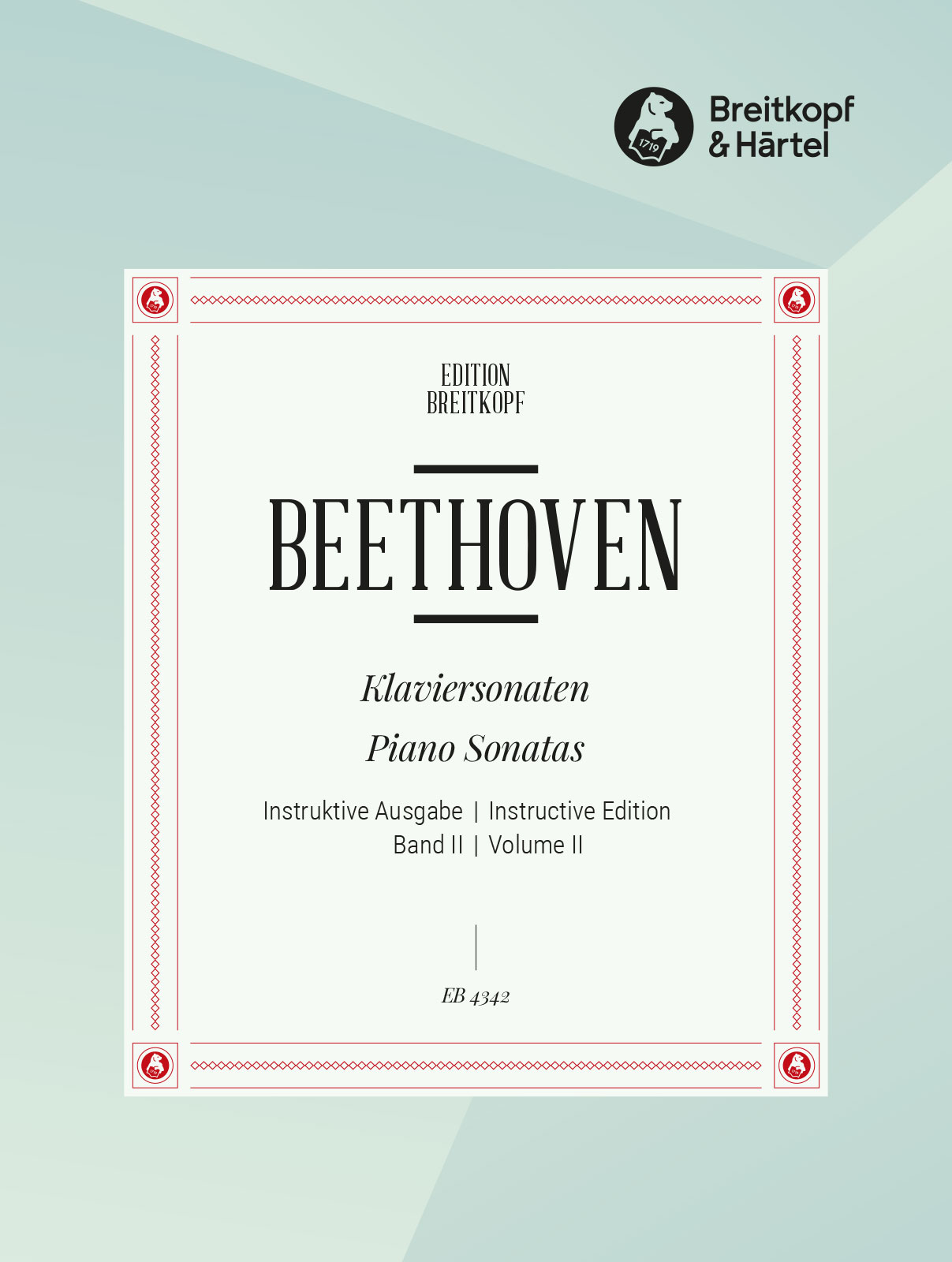
Whereas in past decades Urtext editions with assorted aspirations and readings by various editors were the primary points of departure in addressing Beethoven’s piano sonatas, today it is more often the question of what significance so-called “instructive editions” have in the history of interpretation, what additional benefit is generated from them, and wherein lies their legitimacy. Unlike his teacher Hans von Bülow in his edition of the sonatas, Lamond did not allow any intervention in the music text per se. His indications give instead interpretive approaches, additionally inspiring today’s musicians in the realization of the musical composition.
By the beginning of the 20th century he was a successful and celebrated pianist, concertizing in the US and across much of Europe. He repeatedly caused a stir with his Beethoven projects such as performing sixteen sonatas as well as the “Diabelli” and “Eroica” variations within four days at the Queen’s Hall in London (1925). Dating from this period is also his edition of Beethoven’s 32 piano sonatas that first appeared from Breitkopf & Härtel in 1923. Frederic Lamond thus epitomizes Beethoven interpretation. Even today his name is still associated primarily with Beethoven.
The present „Instructive Edition“ of Beethoven’s 32 Piano Sonatas is a part of the „Breitkopf Originals“ series on the occasion of Beethoven’s 250th Birthday in 2020. Apart from the established Urtext editions, this reissue opens up a fascinating view on the interpretation- and performance practice of one of the most important Beethoven interpreters in the 19th and 20th century.
R.R.P 34
Our Price: 29
Digital Download – PDF
Please create and forward a copy of this publication to the customer