Johann Pachelbel was a German composer, organist, and teacher who brought the south German organ tradition to its peak. He was baptized on September 1, 1653, in Nuremberg, Germany, and died before March 9, 1706, in the same city. Pachelbel composed a large body of sacred and secular music, and his contributions to the development of the chorale prelude and fugue have earned him a place among the most important composers of the middle Baroque era.
Pachelbel’s music enjoyed enormous popularity during his lifetime; he had many pupils and his music became a model for the composers of south and central Germany. Today, Pachelbel is best known for the Canon in D; other well-known works include the Chaconne in F minor, the Toccata in E minor for organ, and the Hexachordum Apollinis, a set of keyboard variations.
He was influenced by southern German composers, such as Johann Jakob Froberger and Johann Caspar Kerll, Italians such as Girolamo Frescobaldi and Alessandro Poglietti, French composers, and the composers of the Nuremberg tradition. Pachelbel preferred a lucid, uncomplicated contrapuntal style that emphasized melodic and harmonic clarity. His music is less virtuosic and less adventurous harmonically than that of Dieterich Buxtehude, although, like Buxtehude, Pachelbel experimented with different ensembles and instrumental combinations in his chamber music and, most importantly, his vocal music, much of which features exceptionally rich instrumentation.
Pachelbel explored many variation forms and associated techniques, which manifest themselves in various diverse pieces, from sacred concertos to harpsichord suites. His legacy continues to influence the Baroque style and organ music to this day.
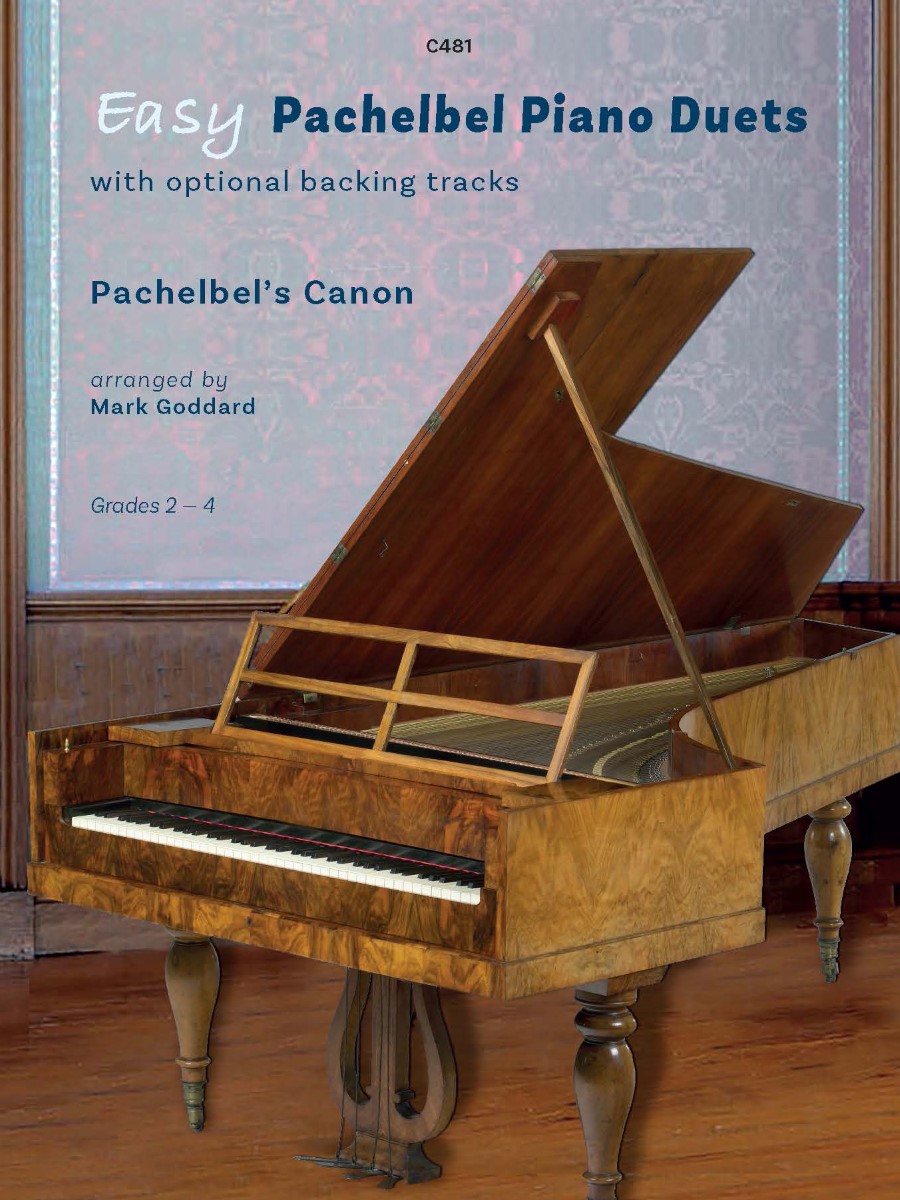
Easy Pachelbel Piano Duets is part of Clifton Edition's Easy Piano Duets Series which presents a selection of sensitively arranged piano duets, each with optional…
Easy Pachelbel Piano Duets is part of Clifton Edition’s Easy Piano Duets Series which presents a selection of sensitively arranged piano duets, each with optional backing tracks. In the interests of playability, these two wonderful tunes have been simplified, while still allowing the spirit of the originals to shine through.
In the interests of playability, the strict formality of Pachelbel’s Canon has been relaxed while allowing the spirit of the original to shine through.
The key has been simplified from D major to C major and the seventeenth century rhythmic notation updated to improve readability.
The optional backing tracks allow for small 12 bar sections (between each of the rehearsal letters) to be practised both ‘slowly’ (θ = 70 with metronome click) and ‘a tempo’ (θ = 84), before putting the whole piece together – ideally in the company of another human!
Previously published by Spartan Press
Former catalogue number SP811